

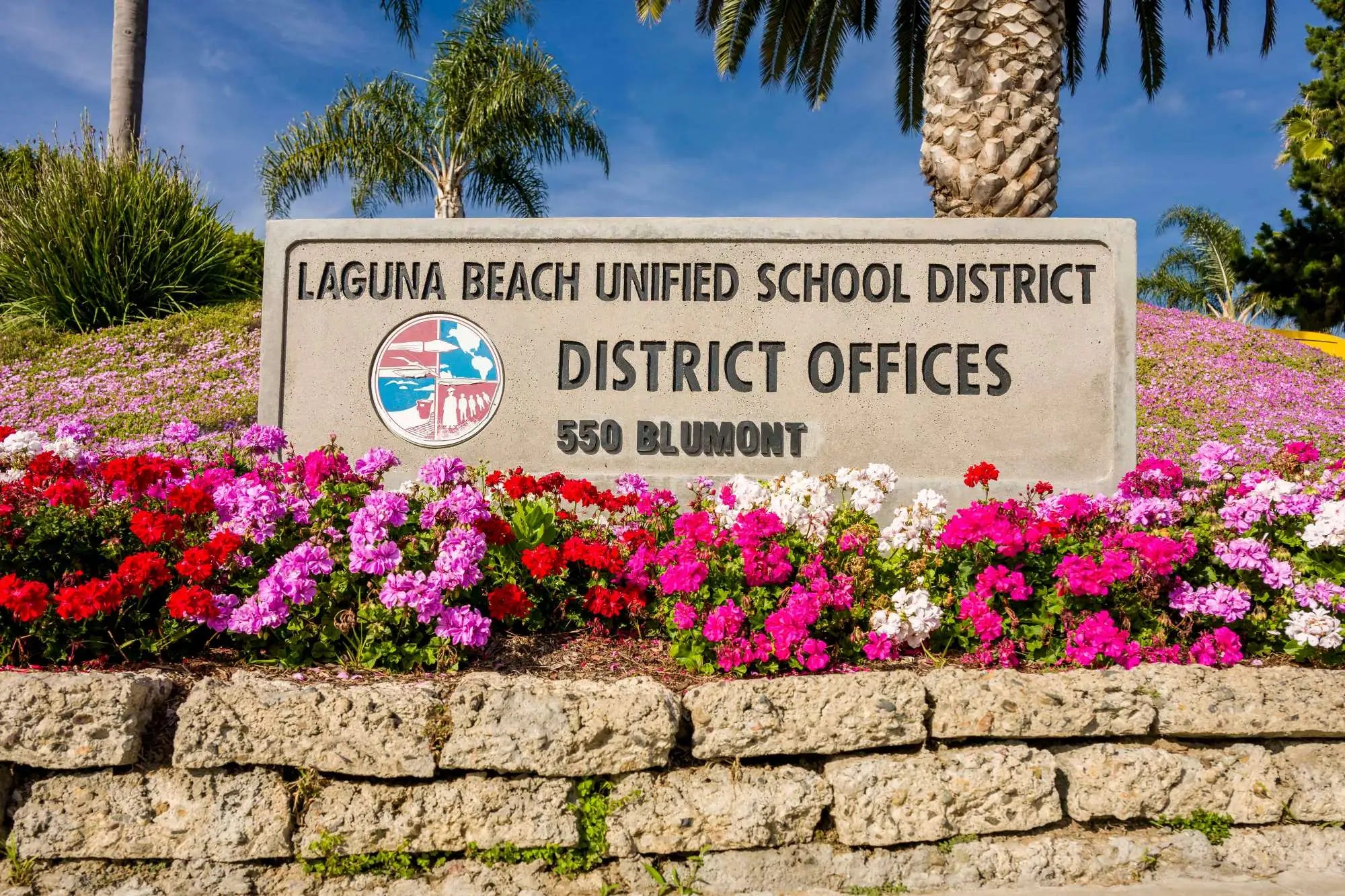
With the school year starting, families are thinking about teachers, schedules, classrooms, sports, homework, new routines, and all the typical chaos of getting children back to school.
I have been thinking about something else too: how different that return can look depending on the child.
I am a parent but not a special education parent. My kids, while young, have yet to need an IEP. I have never sat in meetings trying to figure out whether services were enough, accommodations were actually being followed, or the program everyone agreed to was working in real life.
That makes special education easy for me to overlook, and I suspect it is the same for many Laguna parents.
We know it exists. We hear IEP and 504 mentioned. We know there are aides, speech therapists, and specialized programs. We may even know a child attending a program outside Laguna schools.
But unless your child needs that system, there is little reason to learn how complicated it actually is. There should be.
Part of why I care about this is personal. I had an undiagnosed learning disability throughout my childhood, into college. I love my life and do not imagine it going any other way, but school would have looked different if someone had understood earlier how my brain worked.
Things seen as me not trying hard enough might have been understood differently. Things I struggled with might have come with tools instead of frustration. I probably would have understood myself earlier.
So when people talk about more children being diagnosed or needing accommodations today, I do not see it as evidence something has gone wrong. In many cases, we are better at noticing kids who used to be expected to muddle through.
Some of the most common learning disabilities are also among the easiest to miss. Specific learning disabilities, including dyslexia, are the largest category of students receiving services under the federal Individuals with Disabilities Education Act (IDEA), accounting for nearly one-third of students served nationally.
Dyslexia itself is far from rare — the International Dyslexia Association estimates that 15–20% of people have symptoms associated with dyslexia, including difficulty with accurate or fluent reading, spelling, writing, or language processing. Not every one of those students will qualify for special education, which is another important distinction. These are children sitting in classrooms every day, and many of their struggles may not be obvious to the people around them.
That is a good reason for the rest of us to understand the system before a family we know suddenly needs it.
Public schools have a considerable legal responsibility to educate students with disabilities. Under federal and state special education law, eligible students are entitled to a free, appropriate public education, or FAPE, in the least restrictive environment appropriate to their needs.
Before looking into this, I did not understand how broad that responsibility can be.
It does not start with a particular classroom or end at the edge of an LBUSD campus. It begins with the child.
That responsibility can even go beyond children enrolled in LBUSD schools. The District has obligations to identify and evaluate children with suspected disabilities who live within its boundaries, including some children attending private school, although their available services are not necessarily the same as those available to an LBUSD student.
For eligible children with disabilities, generally beginning at age three, education can range from a general education classroom with additional support to speech therapy, occupational therapy, behavioral services, counseling, or specialized academic instruction.
Sometimes a student needs a specialized classroom or program, and sometimes that program does not exist in Laguna Beach. That does not mean the child stops being Laguna’s responsibility; it just means the system must get bigger.
Laguna Beach Unified and Saddleback Valley Unified together make up the South Orange County Special Education Local Plan Area, or SELPA. That regional structure allows districts to provide a more extensive continuum of specialized programs than a small district like Laguna could reasonably operate on its own.
Laguna provides a lot locally, but if a student needs a highly specialized classroom serving only a few children, it can make more sense to offer that program regionally. Other students may need programs through the county, a state school, or, in rare cases, a nonpublic school.
The idea is a continuum: keep students with their nondisabled peers when appropriate, add support as needed, and use more specialized settings when the individual child requires them.
Listening has to work both ways.
Sometimes a family is fighting to keep their child in a Laguna classroom with appropriate support. Other times, the family is trying to explain that the local setting is no longer working.
“Least restrictive” should not become shorthand for keeping a child in Laguna at all costs. The right setting is where that child can safely learn, participate, and make progress.
Even when another placement is right, there can be real grief in leaving classmates, teachers, routines, and a community a family imagined their child would grow up with through graduation. None of that means Laguna is simply handing a student off. It is how a small district accesses a larger system of support.
Once I understood that bigger structure, IEPs and 504 plans made more sense too, as they narrow that broad responsibility down to one child.
An IEP, or Individualized Education Program, is for a student who qualifies for special education and requires specially designed instruction because of a disability.
A 504 plan comes from federal disability civil rights law and generally assures that a student with a disability has equal access to education through accommodations, even when that student does not require special education instruction.
They are not interchangeable, and an IEP is not just a more serious 504 plan.
A student with ADHD might receive extra time on tests, breaks, or other accommodations through a 504 plan. Another student with ADHD could qualify for an IEP with specialized instruction or additional services.
Same diagnosis. Different child. That is the point.
Support should be based on what that student needs, not just the label attached to them.
LBUSD provides or coordinates services including speech and language therapy, occupational and physical therapy, psychological services, counseling, behavioral support, nursing and health services, transportation, orientation and mobility services, and specialized instructional support. The District also maintains transition services to help eligible students prepare for employment, independent living, and life after high school.
The District also provides support infrastructure for parents.
LBUSD’s Parent Mentor Program has existed since 2008 and helps families navigate communication, questions, and disagreements in the special education process. Alongside the more official support of PMP, the Exceptional Education Committee of Laguna Beach (EEC) is a parent advocacy group that connects families of neurodivergent and twice-exceptional children, shares resources, and advocates for better early screening, teacher training, IEP communication, evidence-based practices, and more inclusive opportunities.
I especially like that its work goes beyond systems and paperwork.
One recent All Abilities Softball Game brought students of different abilities together to play. Inclusion looked like joy, teamwork, and buddies helping buddies. That may sound like the easy part of special education compared to assessments, services, and legal requirements.
The goal is not purely a legally compliant document. It is to give that child a real place in their school and community.
The South Orange County SELPA also has a Community Advisory Committee, or CAC, that brings together parents, educators, and community members to share information, provide parent education, and weigh in on programs for students with exceptional needs.
You do not have to be a special education parent to join, and more of us probably should.
And because the world is not perfect, parents and school districts do not always agree. They can disagree about eligibility, evaluations, services, whether an IEP is being followed, placement, or whether a child is receiving the education the law requires. California has an entire dispute-resolution system for this, including state complaints, mediation, and due-process hearings. Some families ultimately hire advocates or attorneys.
Imagine raising a child who may need therapy, medical appointments, behavioral support, medication, specialized instruction, or help with basic daily life tasks.
Then imagine having to understand assessments, procedural safeguards, education law, timelines, documentation, and what your school district must provide.
Parents can become the resident expert on a disability that even caring educators may have little experience with. They send articles, explain symptoms, share research, and try to help those working with their child understand what they see without seeming to tell professionals how to do their jobs.
There is an emotional load beneath all of that: did I push hard enough? Did I ask for the meeting soon enough? Should I send another email? Am I doing enough for my child?
And, at the same time: Am I becoming that parent? Am I emailing too much? Am I asking for too much? Am I making life harder for teachers, principals, and specialists who genuinely care about my child?
That seems exhausting: needing the people across the table, often respecting and trusting them, yet still having to keep asking whether your child is getting what they need.
Sometimes a parent ultimately has to challenge the school system formally. Not every special education family ends up in a dispute, and not every disagreement means a district has done something wrong, but some parents have to push extraordinarily hard.
The system can turn an ordinary parent into a tireless advocate—they have no choice.
That raises another uncomfortable question for all of us: what happens to the child whose parent lacks the time, money, knowledge, language skills, or confidence to push that hard?
A system should not work best for the child whose parent is best at fighting it.
This can be confusing if your main exposure to special education is a School Board meeting. A parent may come to the podium and describe something genuinely awful involving their child, and the Board may say almost nothing.
From the audience, it can feel dismissive.
But trustees face real limitations on what they can publicly discuss about an individual student. Student information is confidential, individual special education disputes have their own legal processes, and open-meeting law limits discussion or action on issues raised during public comment.
An individual child’s education, placement, or IEP is not something the Board can decide from the dais, but confidentiality cannot become an excuse for ignoring patterns.
The Board governs the District. It approves budgets, staffing, and policy, and it oversees the system as a whole. If family after family describes the same barrier, trustees may not be able to discuss individual students, but they can ask whether there is a larger problem, which extends well beyond an IEP meeting.
A student’s ability does not disappear on a field trip, in PE, at an assembly, on a Chromebook, in athletics, or in an after-school activity.
Technology is one example.
Screens can be remarkable accessibility tools. A device may help a child communicate, write, organize work, or access material in a way they otherwise could not. For another student, lengthy screen use may worsen attention, regulation, headaches, visual issues, or other challenges. The answer is not that screens are always good or bad, but that each child is different.
That is the premise of individualized support, yet it can disappear when we make school-wide decisions.
The same thinking applies everywhere.
A field trip may require significant planning for one child. A loud assembly may be a completely different experience for a child with sensory needs. A PE activity may require modification. Transportation, a new schedule, a new classroom, or a change in routine can create issues many families never have to consider.
For most, these are small details.
For another child, they can determine whether they can participate at all.
The more I learn about special education, the more I understand how much some families carry.
They coordinate teachers, aides, therapists, doctors, psychologists, medications, evaluations, transportation, and outside providers. They check accommodations, document problems, email, attend meetings, and sometimes fight through a legal process.
Then something changes, and again they have to ask, “What about my child?”
That responsibility should not fall so heavily on them alone. Parents should be central to decisions about their children, but accessibility should not belong exclusively to special education families.
As this school year begins, the rest of us can pay closer attention to experiences not our own: when something new is introduced, who might have trouble participating? When we change a routine, program, or policy, is the path to an accommodation clear? When we say something is for all students, is it actually? When several families raise similar concerns, are we listening for the pattern even when details of their children’s must remain private?
I do not need my own child to have an IEP before I care whether another child can fully participate in school, or need occupational therapy before I care whether those services are supported. I also do not need to understand every piece of special education law to notice when a system was designed around only one kind of student.
Special education can feel like a separate world because, for most of us, it is one we never have to enter. For the families who do, nothing about it is separate.
It is school. It is childhood. It is their child’s life.
As we send everyone back to school, I hope we can remember that there is no single Laguna school experience.
And the families who have to fight the hardest for their children should not be the only ones paying attention.
A Public Record for Laguna Schools provides independent, community-focused coverage of LBUSD to help make district decisions, public records, board actions, and issues easier to follow. If you value this work, becoming a paid subscriber or patron helps make it sustainable by covering the research, writing, and platform costs that keep this information accessible to everyone. I am deeply grateful to anyone who reads, shares, subscribes, or supports this work in any way.
Thank you for writing this. So much of it gave me goosebumps and beautifully captured the complexity of navigating special education as a parent. As both a parent and Parent Mentor, I know every family’s experience is different, and I’m grateful for the support that does exist within LBUSD.
At the same time, my own journey—particularly around dyslexia—has shown me how important continued education, collaboration, and advocacy are. It’s a big part of why I helped create the Exceptional Education Committee and started the DDCA OC Dyslexia Support Group. There has been meaningful progress, but there is always more we can learn and do for our kids. Thank you for bringing such thoughtful attention to this conversation. ❤️
This article is so well written, and really helps people understand what parents of special needs children go through. Having raised a child many years ago who did not have special needs made me unaware of what parents and kids go through on a daily basis who need extra support. Now I am experiencing raising a ND child and it is a completely different experience. What I can say is that we are blessed to have her in the Laguna Beach Unified School District where she has thrived and has received all the support that she has needed. Thank you for writing this article and for bringing awareness to our community about special needs families and their experiences.