

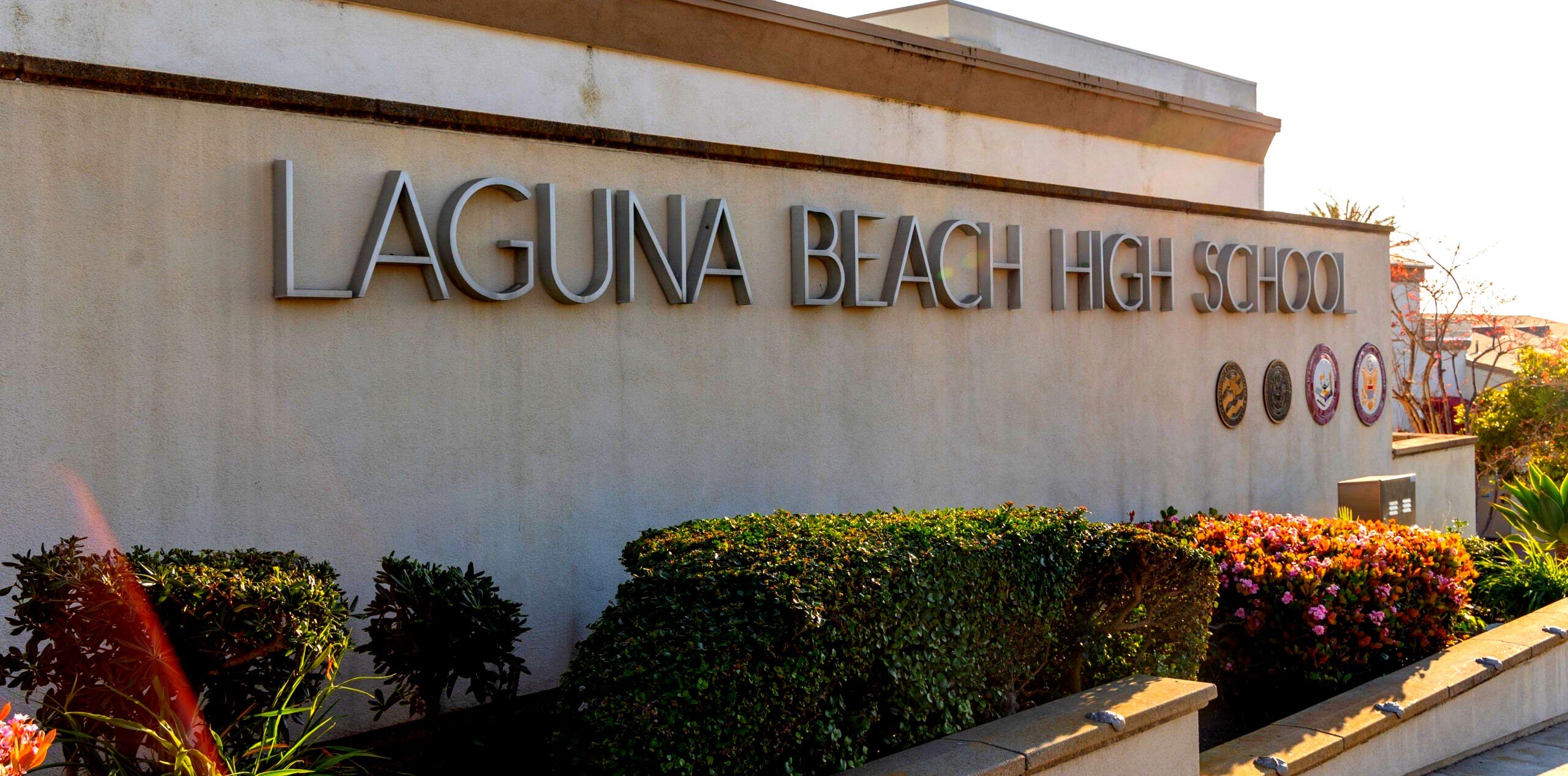
Laguna Beach Unified is getting another independent review, and I think that is a good thing.
As I have shared before, the employee healthcare contribution issue was serious because public funds were involved, collective bargaining agreements were not followed, and the District paid more for employee benefits than required. The District must understand how it happened, correct it, strengthen controls, and provide the public with an honest accounting of what went wrong.
Now the Orange County Department of Education (OCDE) has asked the Fiscal Crisis and Management Assistance Team (FCMAT) to conduct another formal review in response to requests from members of the Laguna Beach community. LBUSD will be providing the records and information FCMAT requests. OCDE has made it clear that initiating the review does not indicate fraud, misappropriation, or illegal fiscal practices, and that the purpose is to conduct an independent assessment and determine whether the evidence requires reporting under Assembly Bill 139.
The questions now are what FCMAT finds, how the District responds to those findings, and whether Board members who spent months demanding this scrutiny will consistently apply that same respect for public accountability when community members raise documented concerns about the Board itself.
OCDE supports Orange County’s 28 school districts while overseeing state-mandated fiscal matters. It reviews budgets and financial reports, provides operational and legal support, assists with countywide services, and has statutory responsibilities when concerns develop about a district’s financial procedures.
FCMAT operates statewide and was created to help California school agencies identify and resolve financial, operational, and data-management problems. Most of its work is preventive management assistance intended to improve systems before a fiscal crisis develops. At the same time, a smaller portion involves assignments from county and state agencies, including extraordinary audits conducted when there is reason to examine whether fraud, misappropriation, or other illegal fiscal practices have occurred.
The name sounds alarming because it includes “fiscal crisis,” but the organization does more than respond after a district’s finances have failed. FCMAT reviews staffing, contracts, purchasing, internal controls, special education, organizational structure, data management, and other areas where an outside team may identify problems a district has missed or tolerated.
Laguna Beach Unified has worked with FCMAT before.
In September 2017, the District agreed to have FCMAT review LBUSD’s special education program. The Board approved the study unanimously, with staff describing it as voluntary, proactive, and part of continual improvement. Board members clarified that LBUSD requested the assistance and was not facing a fiscal crisis.
FCMAT conducted interviews and reviewed records in January 2018, then issued its final report that May. The study examined general education supports, special education staffing, paraeducators, related-service providers, identification rates, outside placements, organizational structure, due process, and the District’s financial contribution to special education.
The report identified areas for improvement, including student-support processes that varied across school sites; some special education and paraeducator staffing levels exceeding FCMAT standards; inconsistent procedures for assigning certain individualized supports; and an increase in the District’s unrestricted contribution to special education. FCMAT recommended stronger coordination among special education, business services, and human resources. It also suggested a closer review of outside providers and placements, as well as a formal process for resolving parent disputes.
These important findings affected some of the District’s most vulnerable students and involved substantial public resources, complicated legal requirements, and decisions likely to shape a child’s entire school experience. The report did what an outside management review is supposed to do: it examined systems, identified variances and financial pressures, and provided the District with recommendations to improve them.
Sometimes a school district asks FCMAT to help improve a program. In other cases, a county office requests an examination after employees, parents, or community members raise concerns. Sometimes the findings support serious allegations, while at other times a lengthy investigation concludes that the evidence does not establish intentional wrongdoing, even though policies and internal controls still need substantial work.
The current LBUSD review falls into a different category from the 2018 special education study.
OCDE says it initiated this process after receiving requests from members of the Laguna Beach community, and the scope includes employee health-benefit contributions, associated contracting decisions, and the use of District resources. The people who submitted those requests have not been publicly identified.
Howard Hills has spent months pressing substantially the same issues, describing the healthcare contributions in the most alarming terms available to him, questioning the conduct of former District leadership, reviewing potential action by county and state authorities, and arguing the Board should continue pursuing the issue whether the district attorney or another outside agency acts or not.
His public campaign around healthcare has included paid advertisements, communications with outside allies, repeated use of the larger $1.77 million figure, and an email titled “CONFIDENTIAL: Unofficial Communications Management,” where he discussed media coverage, op-eds, full-page advertisements, and the need for someone to coordinate press around District issues, yet somehow he’s calling people he disagrees with “political gossip columnists.”
Given that record, it is reasonable to wonder whether Howard, one or more of his colleagues, or people in his “communications circle” submitted the requests that led to OCDE’s decision. It also matches his stated strategy and the work he has done to extend the healthcare issue beyond LBUSD.
Still, OCDE has not named the requesters, and reasonable suspicion does not turn speculation into fact just because it fits neatly. Until those requests become public, I cannot say Howard submitted them.
I will say he is probably pleased.
He wanted a state or county agency to examine the healthcare issue, and one is now doing that. He has argued the District’s own review and corrective actions were insufficient. FCMAT will request records, examine the underlying processes, and decide whether the evidence supports the level of wrongdoing Howard has repeatedly suggested.
He should celebrate the review if he believes in it, and the District should not treat his satisfaction as a reason to resist the process. Public officials, employees, and community members should be able to request outside scrutiny without being accused of disloyalty merely because the eventual finding may be uncomfortable.
The same principle applies when the request comes from people Howard disagrees with.
Over the last year and a half, community members, employees, and advocacy organizations have signaled concerns about LBUSD’s closed-session practices, agenda control, public-comment procedures, trustee communications, and growing uncertainty about where Board governance ends and District operations begin. Some concerns resulted in formal Brown Act cure-and-correct demands. These allow a public agency to review an alleged open-meeting violation and correct it before the dispute proceeds to litigation. A couple of these demands have been made public, and I know of a few more that have been submitted privately.
A cure-and-correct demand does not prove a Brown Act violation any more than a community request to OCDE proves someone committed financial misconduct. Each begins with an allegation supported by whatever facts, records, and legal arguments the person submitting it believes justify further examination.
The receiving agency is then responsible for fully reviewing the complaint, responding through the appropriate process, and correcting the conduct when warranted.
I think Howard cannot reasonably support community requests that trigger an outside examination of District employees and financial procedures, then dismiss other community complaints as political theater when they ask whether the Board majority followed open-meeting law. He can disagree with the claims, challenge the evidence, and defend the Board’s conduct, but the legitimacy of the process cannot depend on whether he likes those who use it.
The Board’s response to the FCMAT review will tell us a great deal about what its members actually wanted from this process.
Will they allow FCMAT to conduct the review without changing every records request into another public accusation against staff? Will they wait for the findings before announcing what they may prove? Will they accept a conclusion identifying administrative weaknesses without validating Howard’s more extensive narrative of corruption? Will they implement recommendations even when those are technical, procedural, and less dramatic than the story Howard has been selling?
When a complaint involves closed session, trustee communications, or the Board’s use of power, will they show the same patience and respect for the process that they now expect from the employees being reviewed?
Based on several FCMAT reports, Mountain View Whisman School District appears to offer the closest recent comparison to what may happen here.
In 2024, the Santa Clara County Superintendent of Schools requested an AB 139 extraordinary audit after parents, employees, and community members raised concerns about business relationships, contracts, transactions, travel, and reimbursements involving the school district’s former superintendent. FCMAT conducted a broad review of expenditures, internal controls, vendor payments, board approvals, travel, credit card purchases, and reimbursements.
The public debate surrounding that school district became intense, with disputed contracts and spending decisions presented as possible evidence of corruption. After reviewing the transactions, FCMAT concluded it had insufficient evidence to establish fraud, misappropriation, or other illegal fiscal practices. The report still led to improvements in contract procedures, written documentation, credit-card controls, travel policies, and delegated purchasing authority.
Mountain View Whisman shows how an outside review can validate stronger systems without validating every accusation behind it. Community members were entitled to raise questions, the county was entitled to examine them, and FCMAT’s conclusion depended on evidence rather than on the intensity of the public campaign.
Based on the records we have available so far, I think Laguna Beach may end in a similar place.
The healthcare issue showed that agreements were not administered correctly, the District paid more than required, and controls needed strengthening. Michael Bishop & Associates examined spending variances, collective bargaining compliance, and internal controls, while leaving legal impropriety outside its scope.
The District eventually proceeded with a corrective-action figure of about $1.04 million and decided against recovering that money from employees who did not establish the contribution rates or administer the benefit structure. Howard continued to cite the larger $1.77 million figure and framed the issue in terms of staff oversight, unions, and former District leadership.
FCMAT will likely obtain documents the public has not seen, interview people who provide important new information, or identify a contracting problem beyond the contribution calculations already discussed. An independent review has value because the conclusion must remain open until the work is finished.
Even with that possibility, the evidence currently available looks more like an administrative, contractual, and internal-control failure than an intentional scheme to steal public funds or improperly enrich employees. I expect FCMAT will confirm that the contribution process was flawed, identify weaknesses in documentation and oversight, recommend clearer delineation of responsibilities and more frequent reconciliation, and find insufficient evidence to support the larger claims of deliberate fraud or malfeasance.
Howard may say procedural failures proved him right, while others may say the absence of corruption proved him wrong. Both reactions would oversimplify what will likely be a more complicated report.
The healthcare problem required correction, but the evidence has never supported treating teachers and staff as suspects for receiving benefits calculated and administered by the District. Howard was right to ask how the error occurred and how to prevent it. His public campaign against staff, unions, former leadership, and anyone rejecting his framing also remains part of the record.
What happens next will reveal whether Howard and his “colleagues” wanted independent answers or public validation for conclusions they had already reached.
If FCMAT finds misconduct, the District needs to address it directly and publicly. If it identifies weak controls, administrative failures, or poor documentation, the District should implement the recommendations and explain the changes. If FCMAT finds insufficient evidence of fraud or malfeasance, the Board owes the public the same clarity and should not stretch procedural failures into unsupported allegations.
The Board should remember the standard it helped establish. OCDE took community financial concerns seriously, and FCMAT will examine the records before reaching a conclusion. Documented concerns about closed sessions, trustee communications, agenda control, and the Board’s use of power deserve the same review and respect for evidence, even when those under scrutiny sit on the dais rather than work in the District office.
Howard has spent months insisting that outside scrutiny is necessary when the allegations involve employees, unions, and former District leadership. He cannot reasonably celebrate that process while dismissing cure-and-correct demands and other governance complaints as meaningless simply because they involve his own Board majority.
The community should pay close attention to what FCMAT finds, but the Board’s response may tell us even more. Howard wanted someone outside LBUSD to look closely at what was happening inside the District, and now that review is here. The harder test will be whether his circle still believes in transparency when the call for accountability comes from inside the house.
A Public Record for Laguna Schools provides independent, community-focused coverage of LBUSD to help make district decisions, public records, board actions, and issues easier to follow. If you value this work, becoming a paid subscriber or patron helps make it sustainable by covering the research, writing, and platform costs that keep this information accessible to everyone. I am deeply grateful to anyone who reads, shares, subscribes, or supports this work in any way.